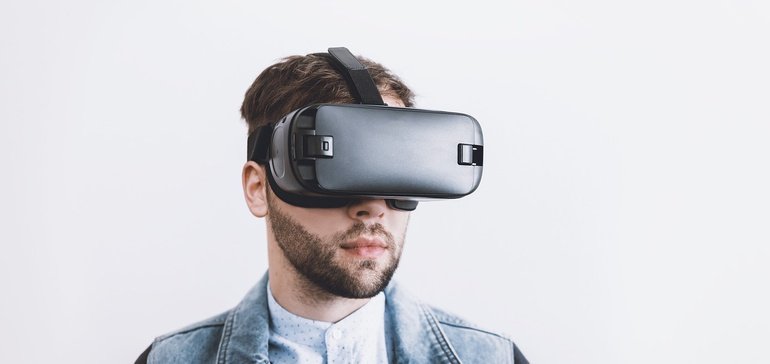
Training in virtual reality. (Image courtesy PwC.).
It is four times faster to train employees soft skills when using virtual reality than when using traditional in-person classroom or online training, according to a new study by PricewaterhouseCoopers.
And it’s cheaper, too — organizations spend about $195 per trainee when using virtual reality, compared to the $207 to $265 average costs for traditional training.

Training modality cost per learner. (Image courtesy PwC.).
The results of the study begin to help clarify the potential value of using virtual reality for soft-skills training such as leadership, sales, customer interactions, and change management, Scott Likens, PwC’s emerging tech lead, told Hypergrid Business.
“Our study found that virtual reality is ready to deploy at enterprise scale,” he said. “The PwC team was able to provision, deploy, and manage a large fleet of head-mounted displays with a very small team.”
Virtual reality is particularly useful during the pandemic when training budgets may be shrinking and it is not safe to train groups in-person. But it can also help companies prepare for future the future, he said, offering low-cost but still effective training at scale.
And just how effective is it
According to the study, which involved 1,600 new managers, workers trained in VR are 340 percent more confident in their new skills, and feel four times as emotionally connected to content as classroom learners.

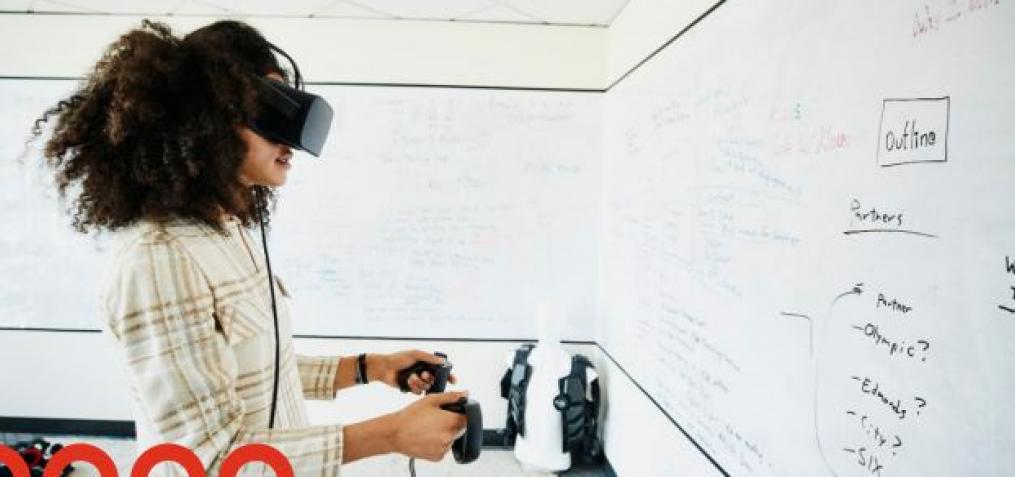
Training in virtual reality. (Image courtesy PwC.).
PwC has already trained more than 4,000 of its own employees using virtual reality, he said.
“As a next step from the virtual reality soft-skills training study, we are conducting a readiness review to inform a global learning and development strategy for virtual reality at the firm,” he said.
And PwC isn’t alone. According to a PwC’s June 2020 CFO Pulse survey, 52 percent of executives are planning to make remote working a permanent option for roles that allow it and this will likely increase remote training opportunities.
“Virtual reality and augmented reality have the potential to add $1.5 trillion to the global economy by 2030, and up to $294 billion of that amount will be for training,” said Likens.
And it’s not just for soft skills, he added. Virtual reality can also be employed in teaching hard skills such as operating machinery or using new software.
Quelle:
https://www.vrroom.buzz/vr-news/trends/training-employees-four-times-quicker-vr