
As enterprise adoption of virtual reality increases, CIOs are choosing the best ways to use the technology to gain a competitive edge. Here are three use cases to consider.
Although virtual reality has traditionally been associated with gaming and other consumer-focused uses, more businesses are turning to the technology for the many benefits it offers.
Here are three areas where enterprise adoption of VR has increased.
Employee safety training
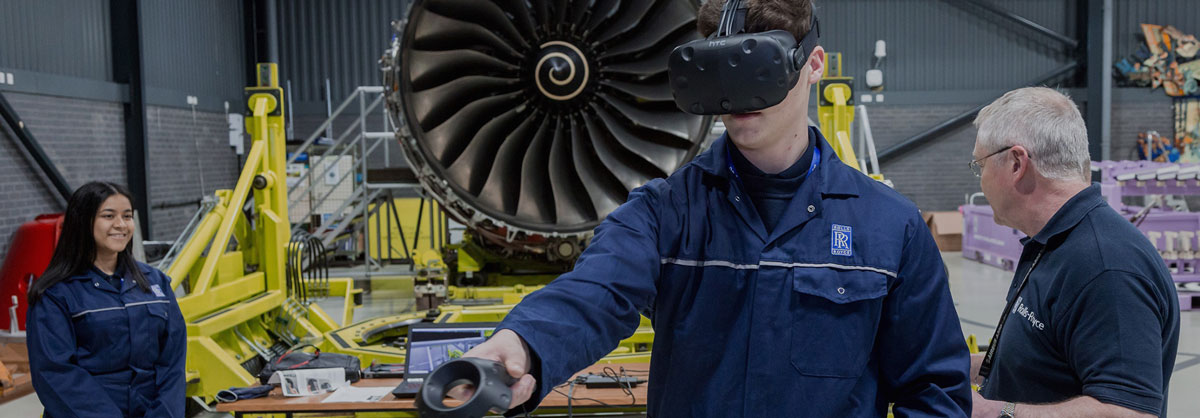
Learning and development programs are important to most organizations‘ success. But those programs are particularly critical for organizations that deal in life-or-death situations or where an employee mistake can cause harm. Augmented reality AR) and VR technology can enable employees to practice for such events, immersing them in lifelike scenarios.
For instance, oil companies BP and ExxonMobil use VR to train their employees in everyday work scenarios such as startup and emergency exit procedure initiations. Employees can interact with their environment and make mistakes in a controlled space. This can reduce the probability that they will commit errors in the real world.
Assembly line workers can train safely in a virtual environment before moving onto the real thing. Jobs that require precision and have a small margin of safety are particularly suited for VR-based training programs. Workers who need disaster training can also use VR to practice in a safe environment. And postal workers can even train to better prepare for dog attacks.
Sales and marketing presentations
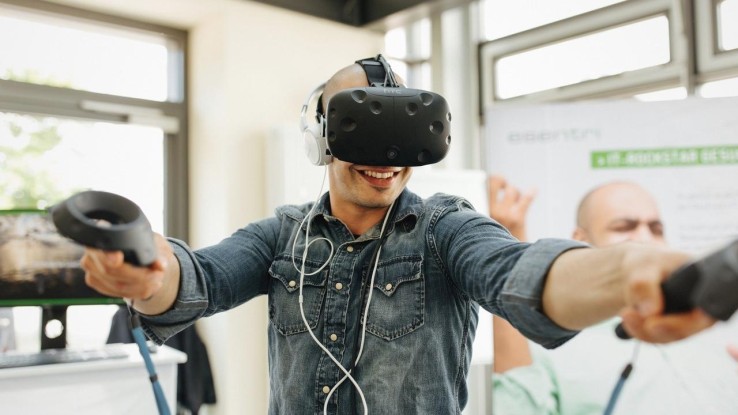
Marketing presentations and sales demos have always placed a premium on the „wow“ factor, and VR is proving to be a great investment in this regard.
VR technology enables sales teams to immerse their clients in environments where they can interact with a product. For instance, Premise LED, an LED manufacturer for commercial and industrial companies, uses VR to illustrate differences in areas before and after lighting to help customers make choices.
Organizations can also use VR technology to introduce customers to a product. Thanks to advances in technology, setting up and creating VR apps is simple and cost-effective. As a result, companies can create one-off apps that they can use for specific purposes and help their products stand out in their trade presentations.
Dental technology provider Zimmer Biomet uses VR to create virtual dental labs where potential customers can use their products and experience the effect they have on surgical and routine dental procedures.
There is no limit to the number of use cases in this environment. Organizations can create virtual catalogs, showrooms and scenarios to highlight their products and gain sales traction.
Industrial design
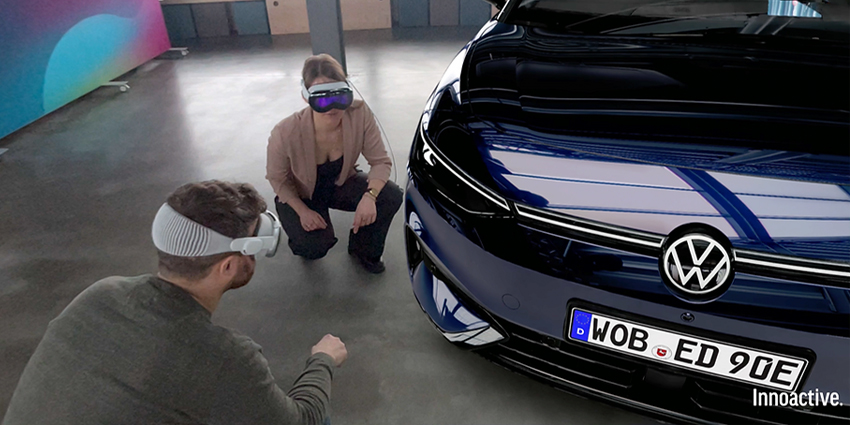
In much the same way employees can train and make mistakes safely within a VR environment, organizations can use VR to see the effects of various design decisions.
For instance, a company that wants to build a new factory or change the workflow of physical processes can use VR to improve processes.
Instead of building real-life scale models, they can design virtual environments and conduct simulations to determine how the new process or design might work. In turn, stakeholders can make better decisions about what will and won’t work.
Given the cost of physical prototypes and the increasing proliferation of 5G, which can support the VR experience, using simulated prototypes is likely to gain even greater traction.
A second wind
Experts initially believed that VR would have the biggest impact on gaming. While VR has changed the gaming experience to a certain extent, it’s becoming increasingly clear that the enterprise use cases are a far more fertile area for VR vendors.
The number of VR enterprise use cases is still in the discovery stage and the market is growing exponentially. There’s no doubt even more business leaders will turn to VR to gain a competitive edge.
Quelle:
https://searchcio.techtarget.com/post/3-enterprise-uses-for-virtual-reality