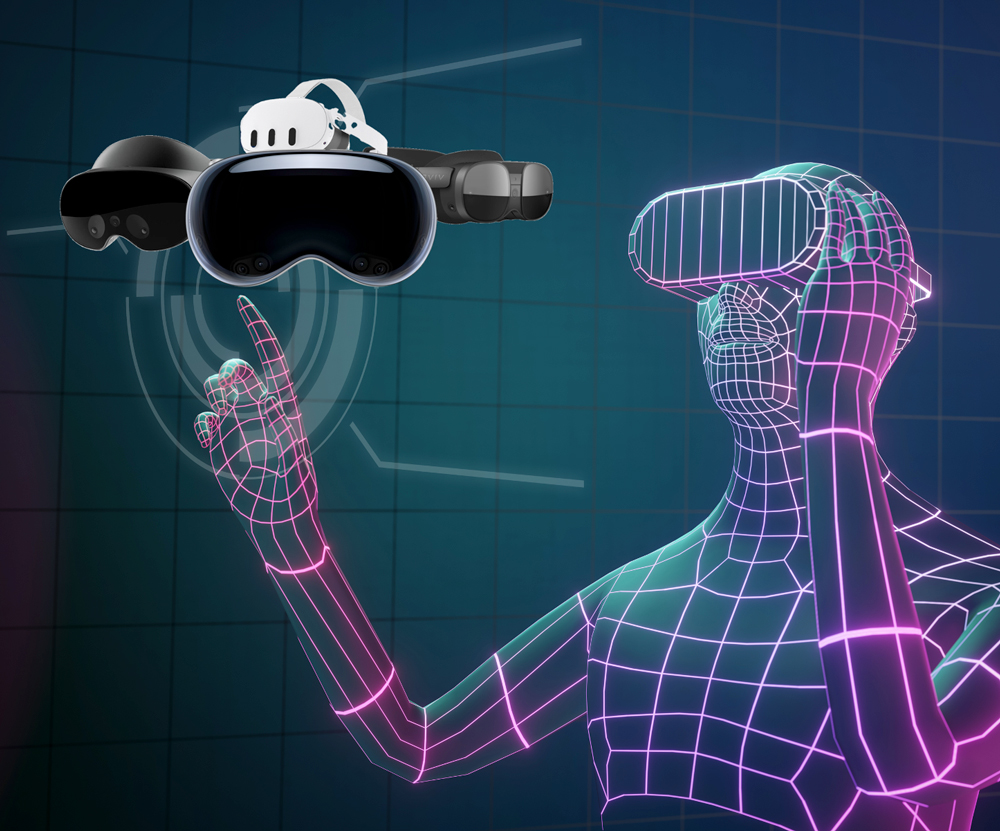
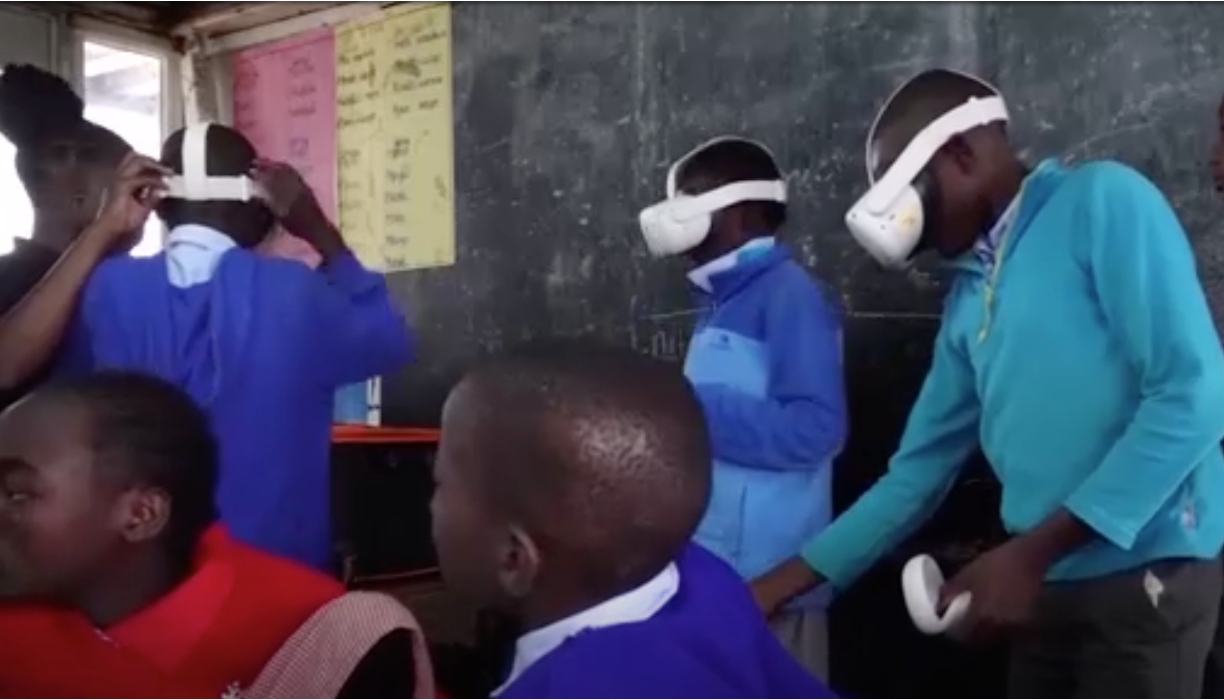
Taking a virtual trip from a Kenyan classroom. At this school in the capital Nairobi, students are donning virtual reality (VR) headsets and going on a school trip with a difference.
In the East African country, VR is being adopted in classrooms to enhance traditional learning and teach children about social and environmental issues.
Organisers say it’s difficult for children to understand topics like plastic pollution and climate change when just taught the theory.
But with VR technology, students can see for themselves the impacts on the environment.
Pupils at Mcedo Beijing School in Nairobi’s Mathare neighbourhood have been learning about the collection and segregation of waste.
„Ukwenza VR has helped me and other students to take care of the environment by separating plastics and organic waste,“ says student Annette Jeptoo.
„Before, I would use plastic bottles and dispose of them by any means, but now I am not buying soda or water using a plastic bottle. I buy soda in a glass bottle,“ says Rooney Odhiambo, another pupil.
Kenya-based Ukwenza VR mainly works with schools in low-income areas, offering virtual field trips to students that would otherwise be impossible due to financial constraints.
The social enterprise’s focus is on issues such as plastic pollution and climate change.
Students have learnt the dangers that plastic waste poses to the environment and have been inspired to take measures to deal with it.
„When you think about an issue as complex as plastic pollution, or even climate change, the question is usually; how can we make children care enough about the issue for them to act differently? Which is very challenging,“ says Ukwenza VR co-founder and CEO Njeri Ndonga.
„Virtual reality comes in helping them, one, conceptualise the problem. It’s one thing to say ‚don’t throw away waste,‘ but it is another thing to understand that if I throw away a plastic bottle, it will end up in the Indian Ocean and it will affect marine life, which then affects me because I want to eat that fish. So, you are able to create a chain that helps them connect their action to each thing that happens along the way
Education specialist Anne Njine supports the project. She says virtual reality helps children become more empathetic to the issues they’re learning about. „What VR does is that it helps the children get the right emotions in place and because VR is more effective in project-based activities, then there is a lot of collaboration and discussions that comes from there,“ says Njine.
„When children are watching the turtles swallowing papers under the sea, when children are watching dumpsites full of papers, there is a discussion where, what can we do about it because it can only get worse. So, what will we do about it?“
Quelle: