Using a virtual reality experience to teach children could become standard in future education, as research published today suggests that it could dramatically improve learning.
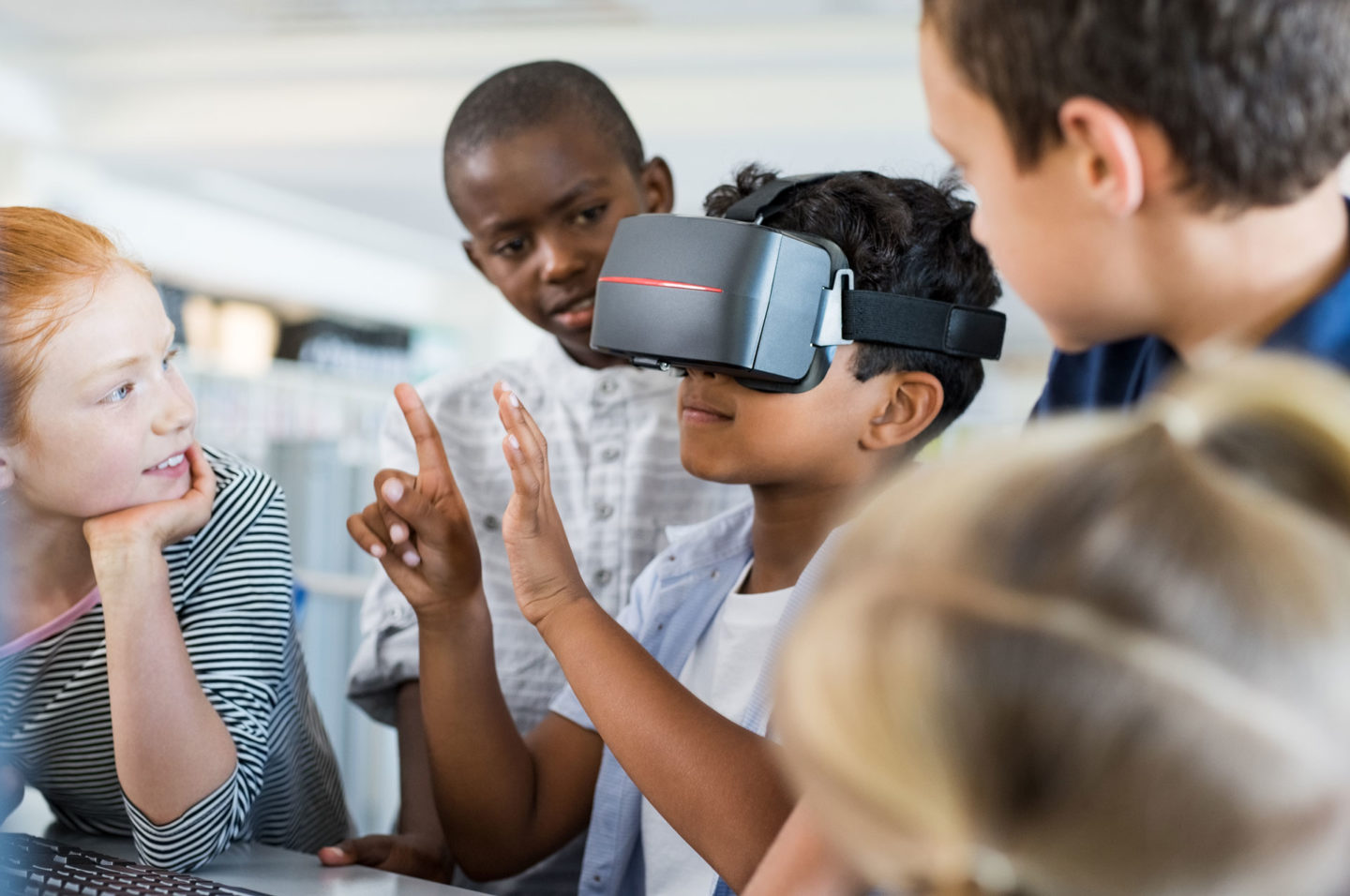
In a study by researchers at the University of Warwick, virtual reality (VR) was found to be more engaging and emotionally positive than either textbook learning or video sessions.
As a result, VR headsets could be used to supplement or even replace traditional education practices, with teachers using a virtual reality experience to bring a given lesson to life.
“This study showed that VR could transform classroom teaching, as you could use VR to go for a walk with dinosaurs and increase engagement in the classroom and give pupils a more positive learning experience,” explained Devon Allcoat, a PhD student from the University of Warwick Department of Psychology.
How a virtual reality experience can improve educational results
In the study, students were given three different types of learning approaches for the same biology lesson: a traditional textbook-based lesson, a fully immersive VR lesson using HTC Vive headsets and a lesson using 2D video of the VR environment.
The researchers assessed the students’ emotional response, engagement and level of learning with each platform.
They found that video, often hailed as an effective way to improve engagement, performed the worst, with textbook lessons coming out in second. However, VR performed the best, suggesting it is the most effective way to keep students interested and help them retain the lessons learned.
VR’s potential for education
Although the headsets used in the study are relatively expensive at present, VR can dramatically cut the costs of immersive learning experiences.
It can be used to recreate either expensive or impossible environments – such as the body, space or key dates in history – or by providing virtual field trips to locations that would be too expensive to visit in real life.
While the technology is still relatively young, it is already being used in some classroom environments, such as through Google’s Expeditions app, which provides immersive lessons through smartphones placed in cardboard VR headsets.
The app already has more than 900 different experiences, spanning museum and landmark tours, historical recreations, 3D visualisations and documentaries.
The research paper, Learning in virtual reality: Effects on performance, emotion and engagement has been published today the Research in Learning Technology Journal.
Quelle:
https://www.verdict.co.uk/virtual-reality-experience-learning/amp/