
University of Cambridge leverage spatial navigation and input to detect early Alzheimer’s symptoms
This week, Cambridge researchers may have discovered an incredibly valuable medical innovation suggesting that VR could detect early Alzheimer’s symptoms in patients.
Research conducted by experts at the University of Cambridge asked volunteers to navigate a spatial/immersive environment, which in turn helps researchers detect impairments in spatial understanding – an early Alzheimer’s warning sign. The research included 100 asymptomatic adults aged 43 to 66.
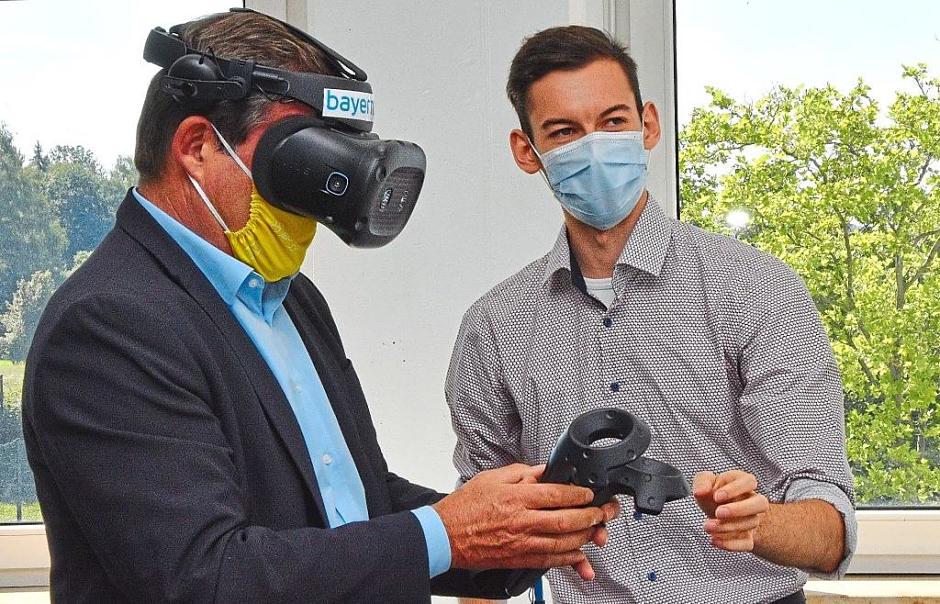
By leveraging HTC VIVE-brand VR technology, the researchers were able to show how navigation abilities are linked to dementia risk based on genetic and environmental factors.
Dr Richard Oakley, Associate Director of Research and Innovation at the Alzheimer’s Society, added:
Very early symptoms of dementia can be subtle and difficult to detect, but problems with navigation are thought to be some of the first changes in Alzheimer’s disease. This innovative technology is a long way from becoming a diagnostic test, but it does provide more evidence about the role of navigational abilities as an early sign of Alzheimer’s disease.
How can spatial navigation help detect Alzheimer’s?
Moreover, Professor Dennis Chan also said that “the VR navigation test is based on our knowledge of the spatial properties of cells in the brain’s temporal lobe, and the application of cellular neuroscience to clinical populations helps bridge the gap in understanding how disease at the neuronal level can result in the clinical manifestation of disease.”
Dr Oakley explained that “innovative” VR technology is far from becoming a diagnostic test. However, the doctor noted that “it provides more evidence about the role of navigational abilities as an early sign of Alzheimer’s disease.”
Dr Oakley also added:
More work is needed to develop this technology, but it will be exciting to see how this research may offer a way to spot disease-specific changes early and help people living with dementia in future.
The research team contains a rich number of medical experts who bring wisdom to this VR-based medical research project. The project’s First author, Dr Coco Newton, UCL Institute of Cognitive Neuroscience, who carried out the research project while stationed at the University of Cambridge, explained that outcomes detected in a user’s spatial movement and input indicate that this type of navigation behaviour change “might represent the very earliest diagnostic signal in the Alzheimer’s disease continuum – when people move from being unimpaired to showing manifestation of the disease.”
Dr. Newton continued:
We are now taking these findings forward to develop a diagnostic clinical decision support tool for the NHS in the coming years, which is a completely new way of approaching diagnostics and will hopefully help people to get a more timely and accurate diagnosis.
Quelle: