Unity developers will be able to integrate the new Oculus Avatars 2.0 from December, with Unreal Engine support coming next year.
Announced at last year’s Connect in September 2020, Avatars 2.0 replaces the legacy Oculus Avatar SDK first launched with the Oculus Touch controllers in late 2016. Back then avatars had an basic monochromic style with the eyes always hidden by a virtual headset or sunglasses. A major update released alongside Oculus Go in 2018 added skin tones, and another just before Oculus Quest in 2019 added lipsync, microexpressions, and simulated eye movement.

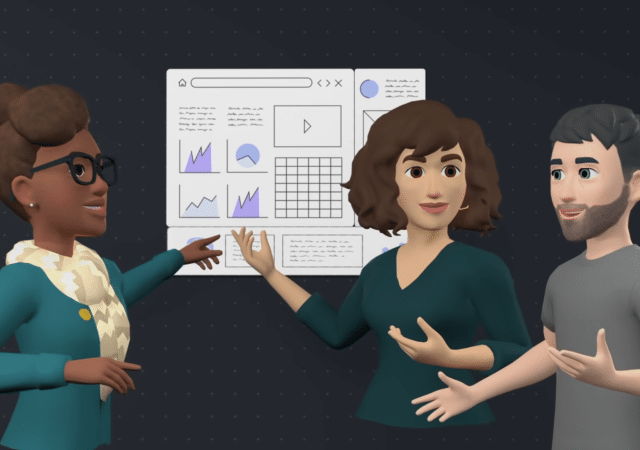
The new avatar system is a total replacement for the old system, not an update. It trades the semi-realistic aesthetic for a more playful cartoonish style. In April Facebook added an editor for the new avatars to the Quest and Rift system menus and launched a private beta for the new SDK. The beta included PokerStars, Topgolf with Pro Putt, Epic Roller Coasters.
While the editor lets you create a full body avatar, but in apps you’ll only see from the torso up. While a VR system with head and hand tracking can make a reasonable guess as to your elbow position, it’s not really possible to do the same for legs.

Facebook is using the new avatars across its entire Horizon suite of social VR apps. That will include Horizon Home, the coming update to Quest’s Home software adding social features. As part of its “metaverse” push, Facebook hopes as many third party apps as possible leverage the SDK so users have a consistent virtual identity across a wide range of apps. However, there’s no word yet on whether the SDK supports other VR platforms such as SteamVR. Multi-platform developers will be unlikely to be enticed if they have to integrate a different avatar SDK for each system.
Quelle: