In a post made on his personal page, Facebook CEO & Chairman Mark Zuckerberg stated he thinks 1 in 2 Facebook staff will work remotely within 5-10 years.
“Over the next 5-10 years, I think we could have 50% of our people working remotely, but we’re going to get there in a measured way. I think Facebook will be the most forward-leaning company on remote work at our scale, and we’ve been working on a thoughtful and responsible plan to do this.”

Zuckerberg acquired Oculus VR llc in 2014 for a total of $3 billion. That’s more than the revenue of every Oculus headset sold and all of the store content sold combined- so far. Since 2014, Zuckerberg has claimed his Oculus acquisition was a long term bet that VR and AR are the next computing platforms.
Zuckerberg claims he believes transitioning 50% of the company to remote will give them hands-on experience with their own technology which will result in better products. This is known as ‘dogfooding’- a company using its own products so they understand what needs to be improved.
But this isn’t the only advantage of remote work. Traffic from commuting makes up a significant portion of carbon emissions. That’s not to mention it requires people to get up earlier just to waste time traveling. Hundreds of hours per year sitting in a car.

Today, people work where they can afford (and want) to move to, or simply a company nearby. Eliminating this limitation would enable companies to operate geographically agnostically. That would fundamentally transform the nature of work. People could live where they want, not where they need to be. Groups of people across the planet could form effective companies without ever leaving their home.
Before the pandemic, just 5% of Americans worked from home. In April, this number peaked at 50%. While many companies will find they prefer this arrangement, the limitations of current technology means most will return to physical offices when a coronavirus vaccine is available, or for some even before. Zuckerberg continues:
“Since so much of what we build is around helping people feel connected and present with others no matter where they are — like our private messaging apps, video chat, Workplace, Portal, and eventually virtual and augmented reality — living our values will help us accelerate the development of these technologies.”
Facebook spends billions every year researching virtual and augmented reality. On several conference calls the CEO is forced to explain this bet to skeptical investors looking for clear signs of a return on this enormous investment.

At Oculus Connect 6, Facebook’s chief AR/VR researcher revealed an internal project to develop a concept for the true next generation of VR. Not a spec bump, but a generational improvement capable of providing an all-day wearable headset and gloves for remote work, with photo-realistic avatars, a wide field of view, realistic depth of focus, and fully legible small text.
That’s still “many years off” however, and “not coming any time soon”. But VR is already used for remote meetings by companies through apps like Spatial. In future as the technology improves, VR will be useful for other aspects of work.
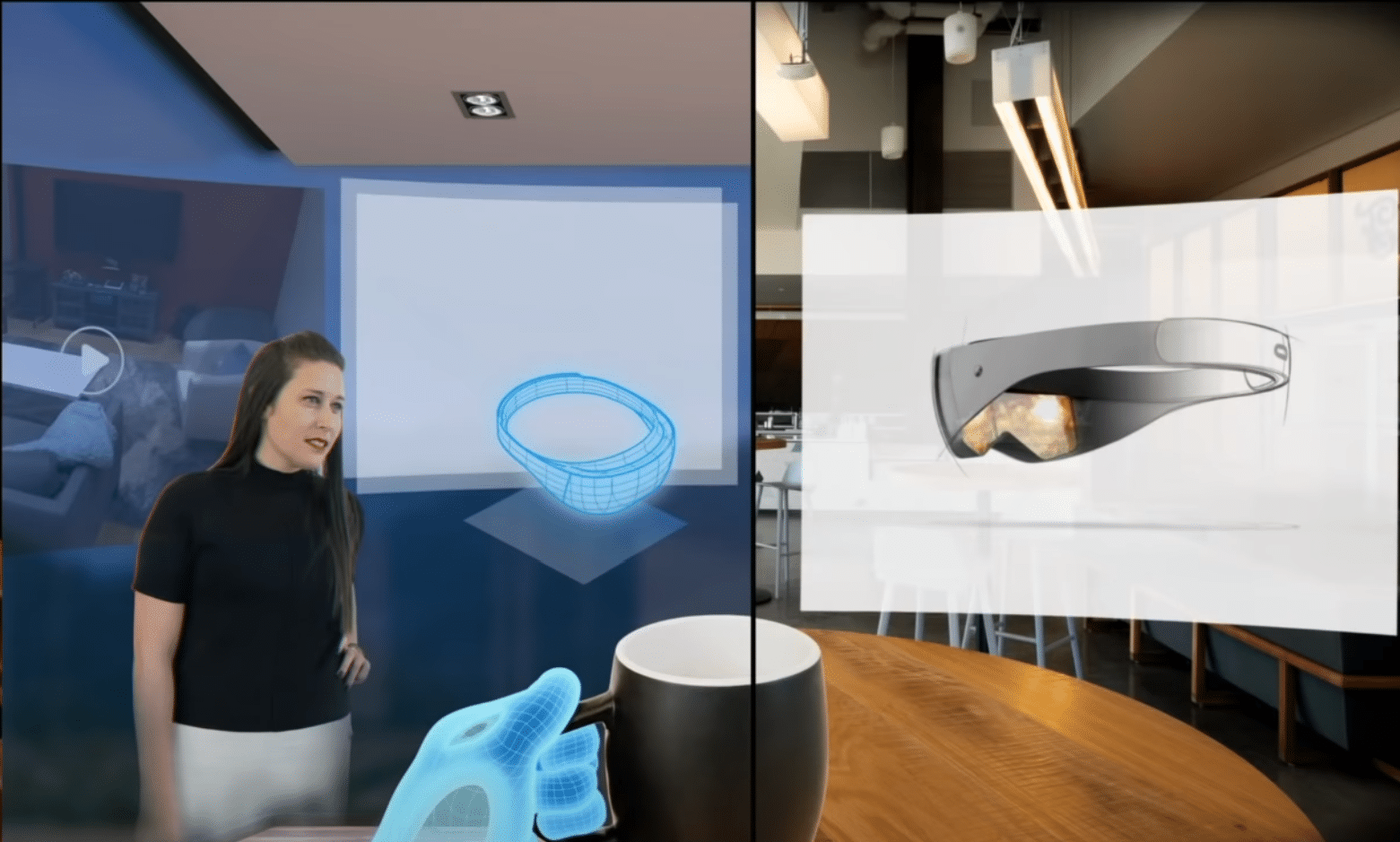
This week, Facebook showed off a concept, running on future hardware, of replacing computer monitors with a virtual workspace allowing windows to be placed anywhere.
So what about the other 50% of Facebook? With Oculus and Portal, Facebook is slowly becoming a hardware company. In April, Portal sales were 10x that of mid-March. Oculus Quest is selling out every time it returns to stock. For hardware engineering jobs, working remotely simply isn’t practical. Within 10 years, it’s not hard to imagine a significant portion of Facebook working on hardware.
Zuckerberg says he expects Facebook will be the first company of its size to hit this milestone. Many smaller companies may follow suit however, ditching commutes, rental and utility costs. The offices of 2020 could become virtual workspaces of 2030.
Quelle:
https://uploadvr.com/zuckerberg-half-facebook/