Investments span consumer and enterprise / commercial segments
Asia Pacific spending on augmented reality and virtual reality (AR/VR) is expected to reach $7.5 billion in 2019, representing an increase of more than 100 per cent from the previous year.
According to IDC findings, investments are expected to grow at an annual rate of 81 per cent until 2023, spanning consumer and enterprise / commercial segments.
The analyst firm also predicts a “considerable increase” in AR/VR spending within distribution and services and the public sector, resulting in combined spending of $30.7 billion by 2023. Other key sectors of growth include personal and consumer services, retail, education and healthcare.
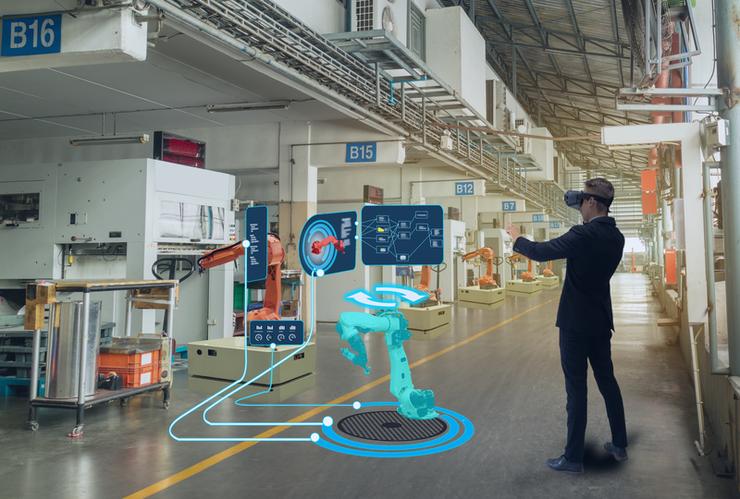
“As new enterprise grade hardware hits the market and several enterprise software companies that offer content development and design tools such as Adobe, PTC and Autodesk add AR/VR capabilities to their platforms, many enterprises are exploring use of AR/VR for a variety of use cases such as training, maintenance, digital prototyping, architectural designs, retail showcase and remote collaboration,” said Avinav Trigunait, research director at IDC.
“As organisations prepare for the future of work, the lines between digital and physical continue to blur and commercial spending is expected to further gain momentum over the next few quarters as more projects come out of pilots and hit production driving both headset volumes and more importantly software and services spend.”
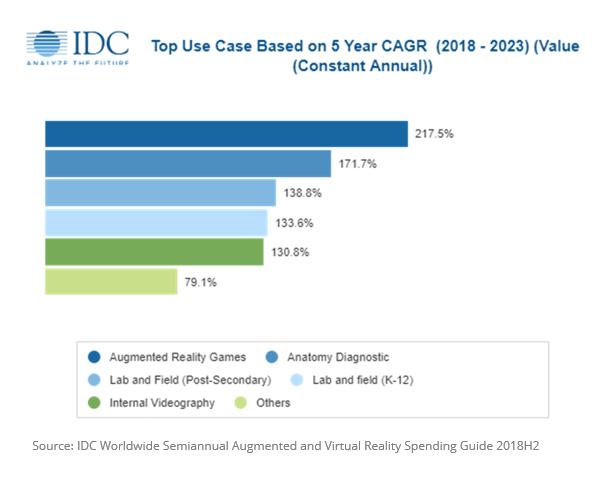
According to Ritika Srivastava – associate market analyst at IDC – “robust growth” in AR hardware, software and services spending will drive overall AR spending “quite ahead” of VR spending by 2023.
“AR/VR technology can deal with most of the requirements of the future of businesses in this millennials workforce from facilitating better corporate training experiences to improvise collaboration, giving shape to new ideas to product design and development,” Srivastava added.
“Furthermore, industries like personal and consumer services, construction, education, retail and healthcare provider are expected to be potentially disrupted by this technology with the combined spending of $29.5 billion by 2023.”
Quelle:
https://www.arnnet.com.au/article/663768/customer-spending-augmented-virtual-reality-doubles/
Trigunait said hardware will account for more than half of all AR/VR spending throughout the next four years followed by software and services.
The largest category of hardware spending will be VR host devices, but AR viewers will have the highest growth rate over the forecast period, at an annual rate of 200 per cent.
Meanwhile, AR software will be the second fastest growing category, enabling it to overtake VR software spending by 2023.