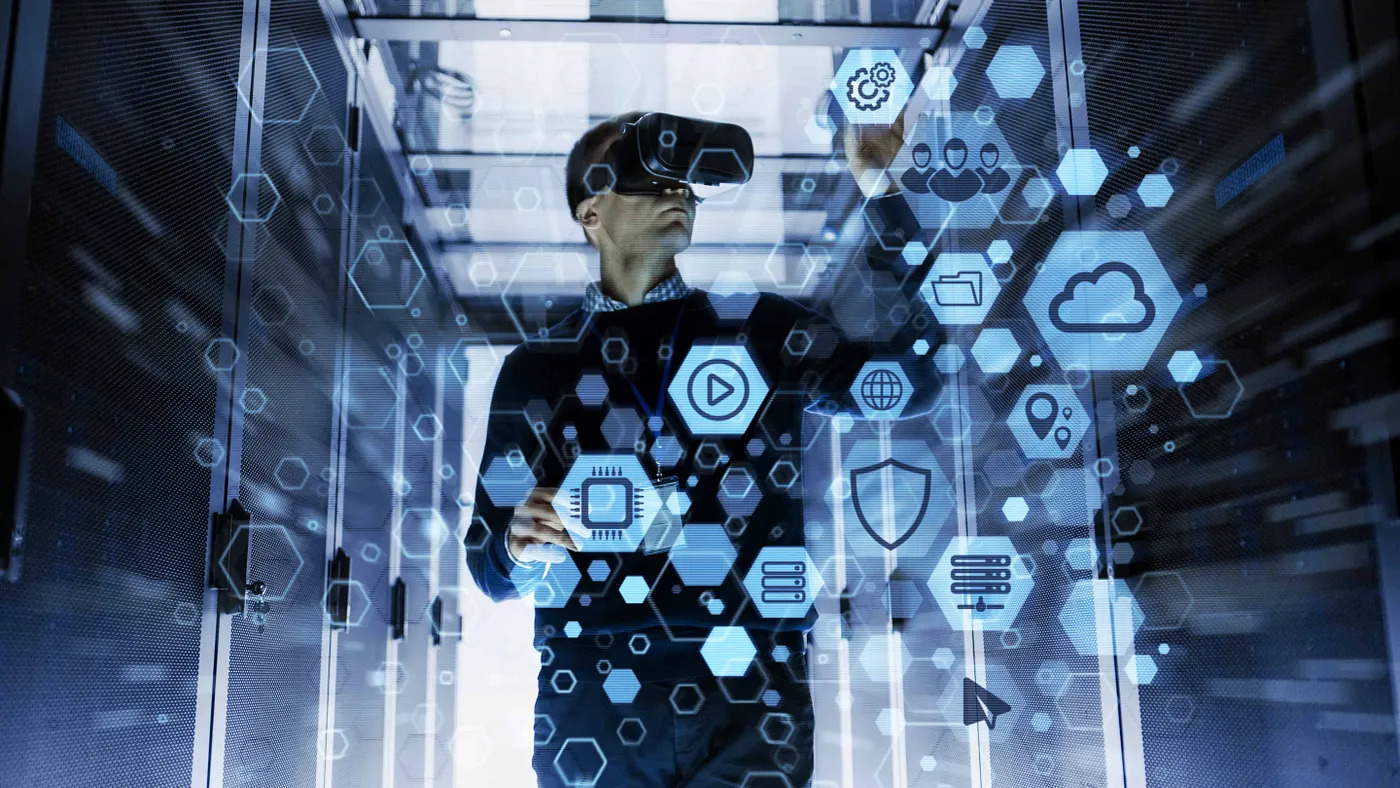
The technology known as augmented reality (AR) allows us to seamlessly integrate virtual aspects with our physical surroundings by superimposing digital content over the real world. Augmented Reality (AR) enhances our sense of reality with real-time information, interactive experiences, and contextual upgrades, whether accessed through smart glasses, headsets, or smartphone applications.
AR has numerous uses and advantages across a wide range of sectors and businesses, including retail, entertainment, healthcare, education, and tourism. AR may also promote social and environmental awareness and engagement in addition to generating new and immersive forms of art, culture, and communication.
This essay will examine the ways in which augmented reality (AR) combines the physical and virtual realms and how this can open up novel and fascinating opportunities for both users and developers.
How AR blends the real and digital worlds
Using a variety of tools and methods, including computer vision, sensors, cameras, GPS, and cloud computing, augmented reality (AR) merges the physical and virtual worlds. In addition to the user’s position, movement, and gestures, augmented reality (AR) may recognize and track the features of the physical world, including lighting, orientation, and location. Using the screen, lens, or speaker of the device, AR may then create and render digital material, such as pictures, movies, audio, or text, and project it into the physical world. Through the use of touch, voice, or motion input on the device, augmented reality (AR) can also allow the user to engage with the digital information and the physical world.
Depending on the extent and nature of the digital material and the real-world setting, augmented reality (AR) can combine the real and digital worlds in a variety of ways. Three primary categories of augmented reality exist: marker-based, markerless, and location-based. Marker-based augmented reality leverages pre-made pictures or objects — like logos or QR codes — as anchors or triggers for digital material. Markerless AR use organic elements like faces or surfaces as anchors or triggers for the digital material. Geographical coordinates or landmarks, like structures or monuments…
Quelle:
Foto: Analytics Insight|5760 × 3240 jpeg